I was recently speaking with a student – call him Gill – choosing subjects for his IB Diploma. Most of it was easy, but the final agonising decision was between Art and History. He was fascinated by and loved both subjects. In History it was exploring sources that disagreed, and working out who to believe. With Art it wasn’t that at all; more like the texture of the charcoal, or the sensation of shaping clay. Gill knew and admired adults who loved both, and wanted the same for himself.
We pondered possible paths ahead for a while, and at one point he said “I suppose I could always pick up an Art class later in life, and more easily than a History class”. I was tempted to agree; it was after all, true. But I could tell he was reaching for consolation, a way of not feeling regret, of imagining he could avoid loss. As we spoke, we came to realise that we were confusing two things. Regret is what we feel when we’ve made a bad choice, one we would undo if we could; the thing said in anger, the poor investment, the job we now wish we’d taken. But sometimes there’s still some sense of missing out, even when we’ve made the right choice. I don’t think it’s right to call that ‘regret’ if it comes as a result of a good decision, one that we stand by, would even make again given the chance. We ended up calling that rather different sense of missing out a loss, and a specific type of loss at that – one that I think tells us something interesting about many of the choices we make throughout our lives.
Some choices are easy – if you are asked to choose between $20 and $30, it makes sense to choose the latter; it’s unambiguously better because you can judge them both on a common universal scale. And that scale means that we should feel no regret about the choice – $30 is simply more on that scale; we’re not missing anything from not choosing $20. I wouldn’t quibble there (well, at least not for this post – sometimes an unquenchable desire for more can result in less, but that’s another story).
The more interesting choices turn out to be those between similar looking options that are in fact very different. Imagine – to adapt an example of philosopher Kieran Setiya’s – that we have to choose between spending the evening basking in a warm sunset, and going to the birthday party of someone we recently met and want to get to know. Now while we can describe both as similar in that they are ways to spend the evening, that hides something important. Whichever option we choose, there is an uncompensated loss because they cannot be measured on a common scale – and so the value of the sunset cannot be measured against the value of friendship. We can certainly choose one over the other – but unlike the $30, the greater value does not replace the lesser. The desire for the sunset will not be fulfilled at the party, so if you can only have one, it makes sense to be conflicted.
A loss is inevitable because of what Setiya calls, delightfully, the specificity of our appetites: we simply cannot get from the sunset what we get at the party, and vice versa. Contra economics 101, what we want from the sunset isn’t a quantity of good feeling (‘utility’) that the party can also supply; they are qualitatively different desires. “Party” is not interchangeable with “Sunset” because they were never the same kind of thing. And this was Gill’s problem exactly: he was never going to find the feel of clay in his hands from weighing rival sources, however hard he tried, however long he spent.
Philosophers have a word for things you can put on a common scale; commensurable, and one for things you can’t; incommensurable. And it’s this latter case where the loss is inevitable, because the only thing that can make up for a missed sunset is a sunset; which is to say, if you miss it, there’s no making up for it.
“So it’s not like you can really weigh them up. I suppose you can’t have it all.” sighed Gill, at one point. He was right, of course; that’s what we’d reached, eventually. Though “you can’t have it all” is usually a claim about scarcity: you can’t do two things or be in two places at the same time. What we’d found was something different and deeper: having it all was never possible anyway, because there is no ‘all’. If there’s no common scale – whether money, wellbeing, happiness, satisfaction – to measure incommensurable goods, then there’s no way to add them, no total to have. Which may sound like a small, even obvious, observation, but it isn’t. Because our usual account of a good life, the one implicit in the narratives and systems around us, in how we think about our work, our choices, even our time, is exactly that: the highest total of its goods. It’s there whenever we ask whether a sacrifice was “worth it”, or talk about maximising wellbeing, or treat our time as a budget to be spent, maybe even where we get the best value. If these things are incommensurable, what do these phrases even mean? And how do we even know what a good life might be?
I think the obvious answer is that we do know, more or less. A good life is one that involves joy, close relationships, meaningful work, health, spending one’s time on things that matter, a degree of physical comfort (or at least, lack of severe discomfort). My guess is that we can probably all name the goods, roughly, and that we would have a lot in common. So naming them is easy.
The incommensurable piece reminds us that joy isn’t a quantity of the same stuff as meaningful work; close relationships aren’t a portion of the good that we can get from good health. If our lives have a lot of one and none of the others they probably wouldn’t be very good lives; and no amount of the one would compensate for lack of the rest.
So a good life isn’t about some imaginary total. It’s about having several different (ie incommensurable) things going, valued for what they are. That doesn’t mean we can’t compare choices, or even lives – we clearly can, and do (we have to); but comparison doesn’t imply sums.
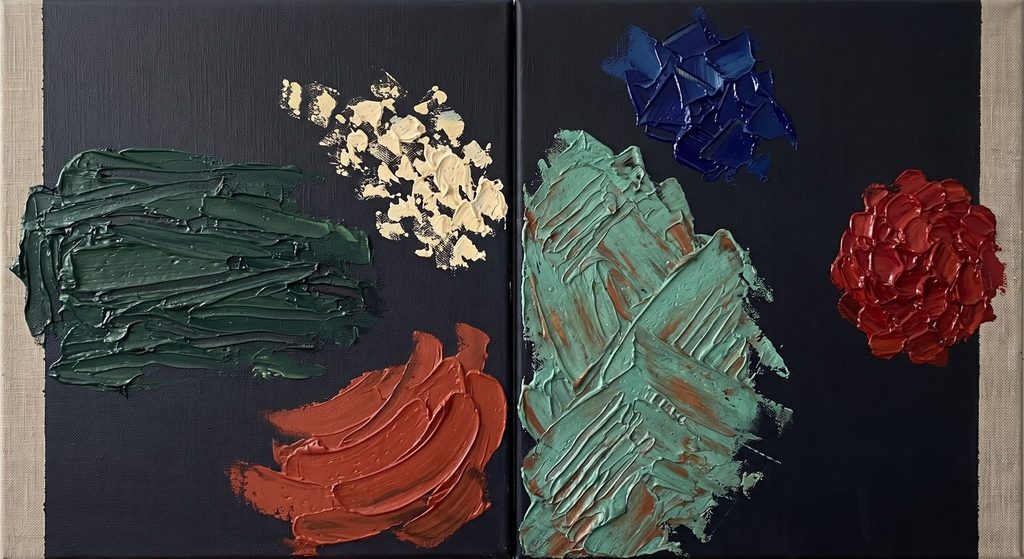
People routinely do have to trade incommensurables; parents give up careers for children, artists take day jobs, people even allow themselves to become unhealthy in work because it matters. And anyone who has ever moved abroad remembers the old friends and the grandparents, left behind at home. The lives that result may be – hopefully are – good, and unregretted. But there is, nevertheless, a loss.
In the end I told Gill that he could indeed pick up an Art class later in life, as he had suggested. But also that he should recognise the loss, because an Art class years on would be very different to deep immersion in Art during his formative years. The loss wouldn’t automatically mean it was the wrong choice; he might never want to undo it – which is to say, might never regret it. But he knew that when he made his choice, picking one rich experience over another, that the one he didn’t pick would be irrecoverably gone.
Gill still hadn’t chosen when we finished, and I don’t think he left very happy. Perhaps that’s because he came for one kind of advice and I gave him another. Or perhaps some truths are just hard to hear, however they’re said. I didn’t (couldn’t) tell him he could have it all but I hope there was some comfort from the fact that not having it all didn’t mean he was bound to regret his choice.
Reference
- Prompt by Claude; Graphics by Gemini
- Setiya, K. (20`17) Midlife: A Philosophical Guide, Princeton University Press